- 22nd Dec, 2025
- Capsule Endoscopy
Frequently Asked Questions about Capsule Endoscopy
Capsule endoscopy has transformed the way gastrointestinal diseases are diagnosed. What was once considered a challenging and invasive process is now accomplished by simply swallowing a capsule. This innovative technology has allowed the surgeon to examine the small intestine, an area which is difficult to examine with traditional endoscopy.
However, patients have questions about how the procedure works, what to expect and how to prepare for the procedure. In this blog, we will discuss some of the commonly asked questions about the method, which will help you stay informed before undergoing the method.
So, let’s get started.
Top Questions About Capsule Endoscopy
Here are the answers to some of the prevalent questions about capsule endoscopy which patients generally ask their doctors.
What Is Capsule Endoscopy All About?
Capsule endoscopy is a diagnostic test in which patients are required to swallow a tiny vitamin-sized pill containing the camera. As it passes through the digestive tract, the capsule captures thousands of images, which are then transferred to the recorder worn by the patient around the waist. The capsule eventually passes through the stool within 24 hours.
What If The Capsule Gets Stuck?
Capsule retention is very rare and only occurs in certain situations. For example, it is common in individuals with a narrowing or blockage in the intestine. Getting a capsule stuck does not cause any immediate complications, and in most cases, the patients do not feel any symptoms. In severe cases, gastroenterologists might recommend an X-ray to scan and locate the cause of the blockage, which mostly gets resolved with medications or other procedures.
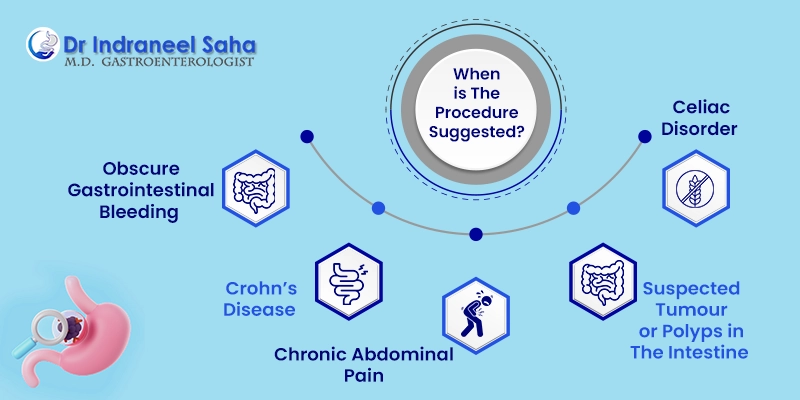
When Is The Procedure Suggested?
Your gastroenterologist might recommend capsule endoscopy when other traditional procedures fail to provide a clear diagnosis. It is commonly recommended in cases of.
- Obscure gastrointestinal bleeding
- Crohn’s disease
- Chronic abdominal pain
- Suspected tumour or polyps in the intestine
- Celiac disorder
- Hereditary small bowel issues
- Colon cancer
How Long Does The Procedure Take?
The entire process of swallowing the capsule and setting up the equipment generally takes a few minutes. However, the whole procedure is generally completed within 8 to 10 hours. Once the recording is completed, the images are then reviewed by the doctor, which is the final step to accurately diagnose any issue.
How Safe Is The Procedure?
Capsule endoscopy is completely safe with a high success rate. However, the only thing that needs to be remembered is that the procedure must be performed by an experienced gastroenterologist who has received specialised training in the technique. Always make sure to follow your doctor’s pre-operative instructions for a successful outcome.
Are There Any Risks Involved?
As stated, the procedure is absolutely risk-free. The only complication that an individual might experience is capsule retention, which is very rare. A skilled healthcare professional even assesses the medical history of the patient to confirm the safety of the procedure.
Can I Drink Or Eat During The Procedure?
Your stomach needs to be empty for the procedure. Patients are not allowed to eat or drink during or immediately after the examination. Clear liquids are typically allowed after about 2 hours, and a light meal after 4 hours unless your doctor gives different instructions.
How Soon Will I Get The Reports?
You can generally get the reports of the procedure within a few days. In some cases, it might take up to a few more weeks, depending on the image analysis time, the workload of the clinic and the need for further investigation.
Can I Continue My Normal Routine After The Test?
Yes, individuals can resume their daily routine and light activities soon after the procedure. However, during the examination, avoid jumping or bending, which can affect image quality.
Conclusion
Capsule endoscopy has emerged as a patient-friendly method to examine the small intestine with maximum diagnostic yield and no discomfort. By understanding what the procedure involves, you can undergo the procedure with peace of mind.