- 19th Jan, 2026
- Capsule Endoscopy
Preparation Tips Before Undergoing Capsule Endoscopy
At times, diagnosing digestive ailments becomes difficult, especially when traditional endoscopy fails to provide a clear picture. That’s when capsule endoscopy is suggested to patients. The procedure is a breakthrough and has revolutionised the way gastrointestinal disorders are detected.
It is an advanced and non-invasive technique used to examine the small intestine and identify issues that could not have been discovered using any other procedures.
However, for the process to be effective, safe, and smooth, proper preparation must be followed. Otherwise, the capsule may not be able to take pictures that could lead to an inaccurate diagnosis.
Hence, if you are someone who is suggested to undergo capsule endoscopy, this blog delves into a list of instructions that ensure a successful test outcome.
Step-By-Step Guide On How Capsule Endoscopy Works
Capsule endoscopy is a non-invasive technique that allows gastroenterologists to view the digestive system tract, especially the small intestine, which is hard to reach by traditional methods.
Now, let’s take a look at how it works.
- The patients are asked to swallow a tiny vitamin-sized capsule that contains a camera, a light source and a transmitter.
- A lightweight recording device is placed around the individual’s waist, which receives the images transmitted by the capsule as it travels through the digestive tract.
- Upon swallowing, the capsule travels through the digestive tract, including the oesophagus, stomach, small intestine and colon, taking thousands of high-resolution images which are then sent to the recorder.
- The capsule naturally passes out through the stool within 24 hours. The recorded images are downloaded by the doctor and carefully analysed to detect abnormalities such as bleeding, inflammation, or polyps.
Before Your Capsule Endoscopy: Tips For Preparation
Prior to performing capsule endoscopy, Dr. Indraneel Saha provides a detailed guide that helps patients plan their daily activities.
- Dietary precautions: Adjusting the diet is probably one of the most crucial aspects to make sure that the intestine is free from any food residue. Hence, patients are advised to stick to a liquid diet like water, broths, soups or clear juices for at least 24 hours. However, avoid coloured liquids, as they can interfere with the camera’s visibility.
- Fasting: Most patients are also asked to fast for 8 to 12 hours before the procedure. This means no food or liquid, except for water, but that too upon a doctor’s consultation.
- Food restrictions: Avoid high-fibre foods, dairy products, and foods that can leave residue for at least one day before the capsule endoscopy.
- Bowel clearance: Dr Indraneel Saha prescribed laxatives to clear out the digestive tract. This improves the clarity of the images captured by the capsule.
- Medication adjustment: There are certain medicines that hinder the results of capsule endoscopy. Thus, before the examination, inform your doctor about any over-the-counter drugs, supplements and blood thinners. It is always necessary to discuss your medicines to avoid complications.
- Lifestyle modifications: On the day of the procedure, try to wear loose clothes to accommodate the recording device around the waist. Also, avoid belts, jewellery or any other metallic objects that often interfere with the signals from the capsule.
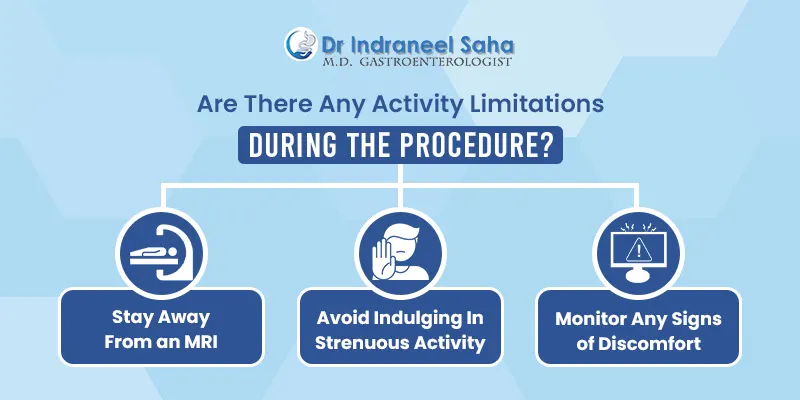
Are There Any Activity Limitations During The Procedure?
After swallowing the capsule endoscopy, here are the following things which all patients are advised to avoid.
- Stay away from powerful electromagnetic fields, such as an MRI, while the capsule is still inside, as it can erase the data.
- Avoid indulging in strenuous activity, as it displaces the recording device.
- Monitor any signs of discomfort or unusual symptoms.
Conclusion
Capsule endoscopy is a safe and effective diagnostic tool that diagnoses conditions which have a probability of going undetected. By following your doctor’s instructions, it is possible to maximise the efficiency of the procedure to allow the gastroenterologist treat the disorders accordingly.