- 30th May, 2026
- Pancreas Doctor
Severe Abdominal Pain: Could It Be Pancreatitis?
Do you often experience sudden and intense pain in your abdomen radiating to the back that leaves you unable to find relief? What’s more alarming about the discomfort is that it is intermittent.
One moment you are completely fine; however, the next, you are unable to even stand still. You might be wondering what’s causing the ache, whether it’s something you eat, a stomach issue or something more serious.
Among the many possible causes, one is pancreatitis. It is a condition that worsens quickly if not addressed at the right time. Hence, Dr. Indraneel Saha, a top pancreatitis doctor in Kolkata, advises patients to recognise the condition and its symptoms to know when to seek help.
What Is Pancreatitis?
The pancreas is a small gland situated behind the stomach, responsible for both endocrine and exocrine functions. It produces digestive enzymes to break down the food and releases insulin to regulate blood sugar levels.
When the pancreas becomes inflamed, these digestive enzymes start attacking the organ itself, leading to symptoms like pain, swelling and other complications.
In the medical context, the condition is known as pancreatitis, and it has two types.
- Acute pancreatitis: It is the sudden inflammation, lasting for a few days, and often resolves with treatment.
- Chronic pancreatitis: It is long-term inflammation leading to scarring and permanent damage to the pancreas.
Severe Abdominal Pain: The Most Obvious Symptom Of Pancreatitis
The most prominent symptom of pancreatitis is severe and intense abdominal pain, mostly in the upper right abdomen. The nature of the pain can be as follows:
1. Radiating to the back
2. Deteriorating after meals, especially after having fatty meals
3. The pain is constant and intense; rather than cramp-like
4. The abdomen feels tender to the touch.
Pancreatitis pain does not typically resolve with over-the-counter medicines, adequate rest or passing time. Moreover, the pain tends to persist and may even worsen over time.
Other Symptoms To Watch For
While abdominal pain is the primary symptom to watch for, pancreatitis is also accompanied by other signs. As the best pancreatitis doctor in Kolkata, Dr. Indraneel Saha lists the common signs which are prevalent in patients with the condition.
- Nausea and vomiting
- Fever
- Rapid pulse
- Swollen or tender abdomen
- Loss of appetite
- Oily or foul-smelling stools (in chronic cases)
- Unexplained weight loss
In severe cases, pancreatitis can also cause rapid fluid loss, leading to dehydration, low blood pressure, organ failure and shock.
When Should You Be Concerned About Pancreatitis?
Not every abdominal pain can indicate pancreatitis. Here are some of the red flags you should consider.
- Pain that comes all of a sudden, is severe and does not improve with medicines
- Pain accompanied by nausea and vomiting
- Yellowing of the skin and eyes (a condition known as jaundice)
- Breathing difficulty due to intense pain
- Losing weight without exercise or dieting
- Oily, floaty and foul-smelling stools
- Persistant digestive issues like diarrhoea and bloating
If you experience these symptoms, don’t ignore them. When left untreated, it can lead to complications such as cyst formation and damage to other organs. Get in touch with a pancreatitis doctor in Kolkata, like Dr. Indraneel Saha, to undergo the necessary tests to confirm its presence.
What Causes Pancreatitis?
Pancreatitis is caused by digestive enzymes becoming activated while still inside the pancreas, causing it to become inflamed and digest itself.
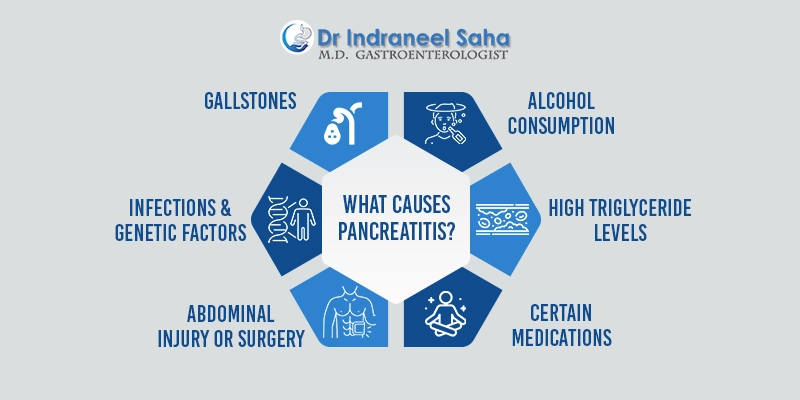
Several factors contribute to its trigger, says Dr. Indraneel Saha, a pancreatitis doctor in Kolkata.
- Gallstones: Sometimes gallbladder stones get stuck at the intersection of the pancreas and bile ducts, leading to blockage that causes the digestive enzymes to accumulate and inflame the pancreas.
- Alcohol consumption: Long-term and heavy consumption of alcohol is a major cause of fatal inflammation of the pancreas. It is because the pancreatic acinar cells sustain damage from free radicals and other toxic byproducts of alcohol metabolism.
- High triglyceride levels: When excess fat builds up in the blood, it increases the risk of pancreatic inflammation. This is because the blood becomes thicker due to excess fat particles, which can slow down blood flow in tiny pancreatic vessels and damage the cells.
- Certain medications: Some drugs, like antibiotics, anti-seizure medications and immunosuppressants, may irritate the pancreas as a side effect. This indirectly increases the risk of pancreatitis.
- Abdominal injury or surgery: Any kind of trauma can cause injury to the pancreatic tissues, which can lead to leakage of the digestive enzymes. These enzymes begin to digest pancreatic cells and trigger inflammation.
- Infections and genetic factors: Some people are more prone to pancreatitis because of genetic mutations that affect how their pancreas works. These individuals experience recurrent or chronic episodes.
Treatment Options
Treatment of pancreatitis depends on its cause and severity.
- Acute pancreatitis: The first step is to stabilise and reduce the enzyme activity to limit further damage. If required, large amounts of IV drips are administered to prevent dehydration. Moreover, painkillers and nutritional support are also provided to reduce the discomfort and ensure proper nutrition.
In severe cases, the pancreatitis doctor in Kolkata focuses on treatment that involves identifying and addressing the underlying cause, such as removing gallstones, stopping alcohol intake, or correcting high triglyceride levels. Additionally, patients are closely monitored for complications like infection, fluid collections, or organ dysfunction, which may require antibiotics, endoscopic procedures, or even intensive care support depending on severity.
- Chronic pancreatitis: Here, the goal of treatment is symptom control and preventing further damage rather than curing the disease. Pain management is a key aspect and may involve stronger medications. Patients are also advised to follow a strict lifestyle, particularly complete avoidance of alcohol and smoking, as these significantly worsen the condition.
Since the damaged pancreas cannot produce enough digestive enzymes, pancreatic enzyme replacement therapy is often recommended to aid digestion and reduce symptoms like bloating, diarrhoea, and weight loss. Nutritional support with a low-fat, high-calorie diet is important to maintain body weight and prevent malnutrition.
Conclusion
Severe abdominal pain is a way of signalling that something is not right in your body. While many patients dismiss the issue as a minor digestive issue, pancreatitis requires immediate medical attention.
If your pain is intense and feels somewhat different, trust your instincts and book your consultation with a leading pancreatitis doctor in Kolkata to rule out any abnormalities.