- 19th Jun, 2025
- Colonoscopy
Colonoscopy: Preparation & Procedure Details
Colon cancer often does not show any symptoms in the initial days. When symptoms appear, the disease has already reached the advanced stage where treatment becomes complicated and the survival chance decreases.
However, colonoscopy is a life-saving diagnostic tool that helps to detect polyps and other abnormalities in the colon before they turn cancerous.
Current guidelines suggest that you should get your first colonoscopy if you are above 45 years of age, and even get yourself screened at routine intervals if you are at average risk of colon cancer.
In this blog, we will discuss everything related to colonoscopy – its procedure and preparation details.
What is a Colonoscopy?
A colonoscopy is a procedure that lets the doctors examine the inside of the large intestine, which includes the colon, rectum and anus. It is recommended to look for changes in the colon, such as swollen, irritated tissues, polyps and cancer.
A colonoscopy is not just a diagnostic tool. Rather, it is a preventive measure for the early detection of serious disorders prior to the appearance of symptoms.
A reputed colonoscopy doctor helps in identifying and treating precancerous growths before they become dangerous.
How is a Colonoscopy Performed?
A colonoscopic examination involves inserting a long, flexible tube called the colonoscope, which has a tiny camera at the end. Most patients are sedated before the procedure to minimise any kind of discomfort and pain.
A colonoscopy doctor then gently inserts the tube into the rectum and advances through the colon to view the large intestine. The camera sends real-time videos to the monitor, which helps the doctor identify the abnormalities. If any issues are detected, it is either removed or a sample is taken for further lab testing.
Preparing for a Colonoscopy
Proper preparation is essential for a successful colonoscopy. If the colon is not clean, the doctor might not be able to view what they need to, resulting in a repeat procedure.
- Dietary restrictions
Two to three days before the examination, your doctor will advise you to take certain dietary precautions. You will be asked to avoid eating solid foods, as they can leave residue in the stomach that will interfere with the results of the procedure. The day before the procedure, you will need to switch to a liquid diet, which can include broths, juices, tea without milk or sports drinks.
- Bowel clearance
To ensure that your bowel is empty and the colonoscopy is effective, you will be prescribed laxatives. This will cleanse your colon by causing frequent bowel movements. Make sure to follow the timing and dosage as instructed by your doctor.
- Medicine adjustments
Don’t forget to inform your doctor about the medicines you are taking. This can include over-the-counter medicines or prescribed drugs. This is important because some medicines cause blood thinning and complicate the recovery period.
- Plan your transportation
Sedation is used during colonoscopy. Hence, you won’t be able to return home alone. Make sure that a friend or family member accompanies you on the day of the appointment and takes you home safely.
- Wear comfortable clothes
On the day of the examination, wear loose-fitting clothes and leave the jewellery at home. You will be given a gown to wear at the clinic.
- Ask questions
If you have any concerns regarding the procedure or its pre-operations, don’t hesitate to talk to your colonoscopy doctor and clear your doubts.
Is colonoscopy safe?
Colonoscopies are extremely safe when performed by experienced doctors who have received advanced training in performing colonoscopies.
Serious complications are rare and might include the following:
- An infection which does not improve with medicines.
- Uncontrolled bleeding if polyps or tissue samples are removed.
- Perforation in the colon wall.
- Allergic reaction to anaesthesia.
- Cardiopulmonary complications are particularly common in individuals with existing heart conditions.
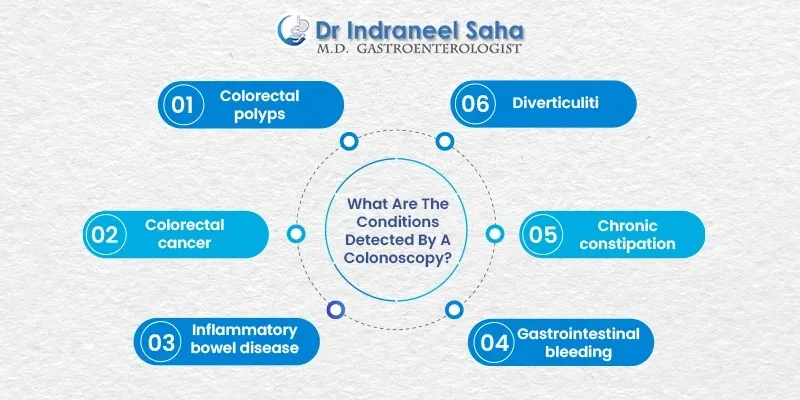
What Are The Conditions Detected By A Colonoscopy?
A colonoscopy doctor usually recommends the procedure to identify the severity of the following conditions.
- Colorectal polyps: These are growths that develop on the lining of the colon and rectum. They are mostly benign and can turn malignant if left untreated.
- Colorectal cancer: It is a growing health concern and is the leading cause of cancer-related deaths. Here, abnormal cells develop on the inner lining of the colon or the rectum.
- Inflammatory bowel disease: It is a chronic condition that causes inflammation in the digestive tract, leading to symptoms like abdominal pain, bloating and irregular bowel movements.
- Gastrointestinal bleeding: A colonoscopy can pinpoint the source of unexplained gastrointestinal bleeding, such as ulcers or polyps.
- Chronic constipation: While occasional constipation can be caused by many factors, if it persists for weeks, it indicates a deeper issue that a colonoscopy can detect.
- Diverticulitis: It is an inflammation in the small pouches of the colon. Though they are common, if not treated at the right time, they can become life-threatening.
Who Should Get A Colonoscopy?
A colonoscopy doctor suggests that patients consider the procedure if they fall into the following categories.
- Those aged 45 or older should get regular screening.
- Individuals with a family history of colorectal cancer, polyps and certain genetic syndromes.
- Experiencing symptoms like rectal bleeding, changes in bowel habits and severe abdominal pain.
- If any tissue was removed during the previous colonoscopy.
If you belong to any of these groups, get in touch with your healthcare provider to determine the frequency of colonoscopy screening.
Conclusion
Colonoscopy can save lives by detecting cancer and other abnormalities in the early stage. While the idea of preparation might seem frightening, the procedure is safe and highly effective. Regular screening will reduce treatment complications and even save lives. Talk to your colonoscopy doctor today and take the first step towards your health.