- 18th Aug, 2025
- Esophageal Dilatation
Home Remedies and Lifestyle Tips to Manage Mild Esophageal Strictures
Feeling like the food is stuck in your throat even after swallowing? For many individuals, difficulty with swallowing solids and liquids is more than an occasional discomfort.
It is a sign of an underlying condition known as esophageal strictures, a condition where the esophagus becomes narrowed and tightened, making it difficult for food to pass through smoothly.
The most effective treatment option to manage the condition is esophagal dilatation. It is a procedure that is used to widen the narrowed section of the esophagus.
In addition to this method, the right lifestyle changes and dietary choices also play an important role in easing the symptoms of esophgeal strictures, especially in mild cases.
In this blog, we will explore some home remedies and lifestyle habits to get relief from mild esophageal strictures effectively.
What Causes Esophageal Strictures?
Before getting to the tips, let’s understand what causes esophageal strictures.
The esophagus is a long, muscular tube that connects the throat to the stomach, thereby facilitating the passage of food. Now, the normal diameter of the esophagus is up to 30 mm; however, when it narrows down to 13 mm or less, it results in esophageal strictures. As a result, individuals with this condition find it difficult or painful to swallow food.
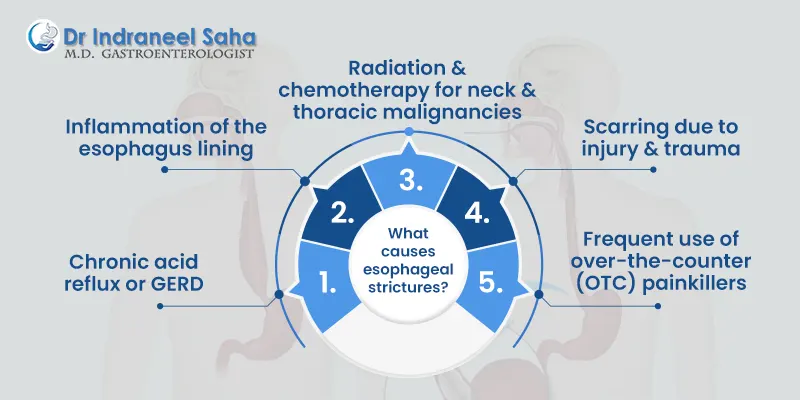
Esophageal strictures can result from the following causes:
- Chronic acid reflux or GERD
- Inflammation of the esophagus lining
- Scarring due to injury and trauma
- Frequent use of over-the-counter (OTC) painkillers
- Radiation and chemotherapy for neck and thoracic malignancies.
The goal of treatment is to widen the esophagus again so as to let the food pass down adequately and comfortably. For most strictures, esophageal dilatation is an effective approach.
It stretches the esophagus with a balloon or cylinder a little at a time. If required, the procedure is repeated to maintain or further improve swallowing function. However, for mild situations, noninvasive techniques can offer relief.
Cope With Mild Esophageal Strictures? Tips You Can Follow
- Eat soft and moist foods
One of the easiest ways to manage esophageal strictures is to take dietary precautions. Focus on including foods in your diet that are soft, easy to swallow, and less likely to irritate the esophagus. Some of the recommended items are soft and ripe fruits, cooked vegetables, mashed potatoes, and scrambled eggs. - Practice proper eating habits
The way you eat your food is equally important to what you eat. Developing good eating habits prevents food from getting stuck. For example, eat small portions at frequent times instead of a large one. Make sure to eat slowly and chew thoroughly. Avoid lying down immediately after having food. - Manage acid reflux
Uncontrolled and frequent GERD aggravates the symptoms of esophageal strictures. Hence, controlling the condition is important to manage strictures. You can elevate the head of your bed or use foam wedges to reduce the risk of acidic stomach content entering the esophagus. You also need to stay upright for at least 30-60 minutes after eating. If the symptoms persist, consider taking antacids or proton pump inhibitors upon your doctor’s advice. - Avoid smoking and drinking alcohol
Both smoking and drinking irritate the esophgeal lining. Smoking reduces saliva production, which is required for digestion, while alcohol relaxes the lower esophageal sphincter (LES), worsening acid reflux. - Maintaining a healthy weight
Having excessive fat around the abdomen puts pressure on the stomach. It not only causes acid reflux but also leads to the progression of strictures.
Final Words
Managing esophageal strictures does not always need invasive procedures if lifestyle modifications are followed correctly from the beginning. For patients where conservative treatments fail to produce results, consult a gastroenterologist like Dr. Indraneel Saha to undergo esophageal dilatation as a safe and reliable option.