- 25th Aug, 2025
- Jaundice Doctor
Types of Jaundice Explained: Hepatocellular, Hemolytic, and Obstructive
Is the skin or the whites of your eyes starting to turn yellow? It could probably be a sign of jaundice, a sign that something in the body is not functioning properly.
Not all jaundices are the same. They are categorised into various types depending on the underlying cause and how it is affecting the body.
This blog will mainly focus on the three different types of jaundice: hepatocellular, hemolytic, and obstructive, and delve into how they develop. If you notice any symptoms of jaundice, don’t wait to consult a leading jaundice treatment doctor like Dr. Indraneel Saha to get an accurate evaluation and expert care.
What Is Jaundice?
Jaundice is characterised by yellowing of the skin, mucous membrane, and whites of the eyes due to excessive buildup of bilirubin in the blood.
Now, bilirubin is a yellow pigment that is formed as a byproduct when the red blood cells in the body break down naturally. In normal situations, the liver processes the bilirubin, which is then excreted through faeces and a small amount by urine.
However, when the process is disrupted, the bilirubin gets accumulated in the bloodstream, leading to jaundice.
Hence, jaundice is not a disease itself but rather a sign of hidden health issues.
- Symptoms Of Jaundice
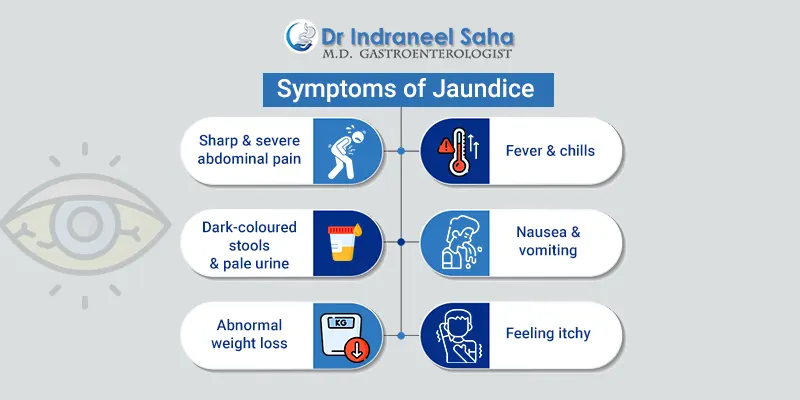
In addition to yellowing of the skin and eyes, a jaundice treatment doctor lists down the other symptoms that patients are likely to experience.
- Sharp and severe abdominal pain
- Dark-coloured stools and pale urine
- Abnormal weight loss
- Feeling itchy
- Nausea and vomiting
- Fever and chills
Early diagnosis can be life-saving for jaundice, especially in cases involving liver failure and severe bile duct obstruction.
Types Of Jaundice
There are three main types of jaundice: hepatocellular, hemolytic, and obstructive, each with different causes and mechanisms. Let’s know them.
- Hepatocellular jaundice
It occurs when the liver is damaged or dysfunctional. When the liver cells are impaired, they fail to process and excrete the bilirubin, leading to its buildup. This type of jaundice is typically a sign of liver diseases such as viral hepatitis (A, B and C), non-alcoholic and alcoholic fatty liver disease, drug-induced liver injury, and cirrhosis.
Symptoms include abdominal pain, loss of appetite, fatigue, nausea, dark urine, and pale stools. A jaundice treatment doctor will perform diagnostic tests to examine the liver enzymes and bilirubin levels. You will also be required to undergo a liver biopsy if the suspected cause is cancer.
Treatment includes managing the liver condition, mainly through medications, lifestyle changes, and, in severe cases, a liver transplant.
- Hemolytic jaundice
This type arises from haemolysis, or excessive destruction of red blood cells, which produces more bilirubin than the liver can process. Here, the liver cells are healthy; however, they struggle to excrete too much bilirubin efficiently due to its high load, resulting in jaundice. Common causes include inherited blood disorders like sickle cell anaemia and thalassemia; autoimmune conditions like hemolytic anaemia and lupus; blood infections and certain medications or toxins.
Symptoms are the same as jaundice, like yellowing of the skin and eyes, abdominal pain, pale stool, fatigue and enlarged spleen. Since the root cause lies in red blood cell destruction, tests involve assessing the red blood count, reticulocyte and bilirubin counts.
Treatment of hemolytic jaundice focuses on addressing the underlying cause and managing the symptoms. Approaches employed by a jaundice treatment doctor are as follows:
- Blood transfusion in case of severe anaemia to replace the healthy blood cells.
- Discontinue the trigger medicine if it is leading to hemolysis.
- Plasmapheresis or IVIG in autoimmune conditions where steroids are effective.
- Medications to support red blood cell production.
- Obstructive jaundice
Obstructive jaundice, also known as cholestatic jaundice, occurs when the flow of bile from the liver to the small intestine is blocked. This results in the deposition of conjugated bilirubin in the blood. The blockage within the bile duct mainly occurs due to gallstones, tumours, bile duct strictures and parasitic infections.
The symptoms of this type of jaundice are similar to those of other types. Patients might also experience high fever if infections such as cholangitis develop. Here, the jaundice treatment doctor conducts imaging tests like ultrasound, CT scan, ERCP and MRI to locate the obstruction.
Treatment focuses on prescribing medications to manage the infections, surgical removal of the gallstones and tumours or the placement of a stent for biliary drainage.
Is Jaundice Serious?
Whether jaundice is serious or not entirely depends on its root cause. In rare situations, it is usually harmless, especially in newborns due to immature liver functioning and excessive breakdown of fetal red blood cells. Sometimes, certain medicines and extreme fasting might temporarily elevate the bilirubin levels.
In these situations, jaundice usually resolves on its own or with minimal treatment. However, if the symptoms remain persistent or worsen with time, it is important to consult a jaundice treatment doctor immediately to rule out complications.
What Are The Complications Of Untreated Jaundice?
It is to be noted that jaundice must not be considered a cosmetic issue. Instead, it is a warning sign pointing to serious issues. If left untreated, it can result in complications such as liver failure, chronic hepatitis, liver damage and even cancer.
Thus, an evaluation by a doctor is necessary to prevent long-term and unmanageable conditions.
Can Jaundice Be Prevented?
While not all types of jaundice can be prevented, it is possible to avoid many causes by taking preventive measures. This includes the following:
- Limiting consumption of alcohol
- Maintaining a healthy weight to prevent fatty liver tissue
- Getting vaccinated for hepatitis
- Avoiding contaminated food and water to prevent infections.
- Managing underlying blood disorders
- Having only prescribed medicines
- Staying hydrated
- Regular liver function tests, if necessary
Conclusion
Each type of jaundice indicates a different issue. Early consultation with a jaundice treatment doctor like Dr. Indraneel Saha will lead to accurate diagnosis, the right treatment plan, and better health outcomes.