- 19th Nov, 2025
- Jaundice Doctor
Alcohol and Jaundice: Is There Any Connection?
Alcohol consumption is quite common these days; rather has become a social and cultural practice. Despite the widespread awareness about negative health effects, a large segment of the population continues drinking alcohol, ignoring the subtle signs that the body is trying to tell.
One such warning sign is jaundice, the yellow discolouration of the skin and eyes. One might think that the condition is a minor skin concern. However, the sudden yellowish tinge signals that the liver is not working properly and is under stress.
Alcohol consumption is associated with common discomforts, especially hangovers. However, regular heavy drinking is one of the major reasons behind liver disease, which in turn also triggers jaundice.
This blog will discuss the relationship between alcohol use and jaundice, as well as explain why consulting a doctor for jaundice, like Dr. Indraneel Saha, is very important if you notice any unusual symptoms.
Understanding Jaundice
Jaundice is a condition that needs to be treated immediately. It is characterised by yellowing of the skin and eyes due to excess accumulation of bilirubin in the blood.
Now, bilirubin is a yellow pigment that is the end product of RBC (red blood cell) breakdown. Now, in normal situations, the bilirubin is generally processed by the liver and is pushed out of the body mainly through the stool and to a lesser extent, the urine.
An individual suffering from jaundice means that the liver is not working efficiently to process the bilirubin, which results in its accumulation in the blood.
Jaundice is of three types.
- Pre-hepatic: It is mainly caused by the excess breakdown of red blood cells, which overloads the liver with more bilirubin than it can process.
- Hepatic: It is a type of liver dysfunction that results from various conditions like hepatitis, cirrhosis and alcohol-induced liver damage.
- Post-hepatic: It occurs when there is an obstruction in the bile ducts, primarily by gallstones and tumours, that prevents the bilirubin from being excreted.
Effect of Alcohol on Your Liver
Alcohol consumption is the primary cause behind long-term damage to the liver, which has resulted in the death of many individuals. The liver acts as the body’s natural filter and is often described as the detoxification powerhouse.
The organs play a crucial role in processing and neutralising toxins, including alcohol, into less harmful substances. Whenever an individual drinks a lot of alcohol, the liver metabolises, or breaks down, alcohol into a chemical called acetaldehyde, a poisonous by-product that significantly damages the liver cells.
With occasional or moderate drinking, the liver can regenerate healthy new cells to replace those that die during the process of filtering toxins like alcohol.
However, according to the opinion of Dr. Indraneel Saha, the best doctor for jaundice, long-term and excessive alcohol consumption leads to inflammation, scarring and ultimately liver failure.
Alcohol-induced Jaundice
When alcohol damages the liver, the organ loses its ability to process and excrete bilirubin efficiently. As a result, its level rises in the bloodstream, thereby causing jaundice. Jaundice in this context signals significant liver dysfunction.
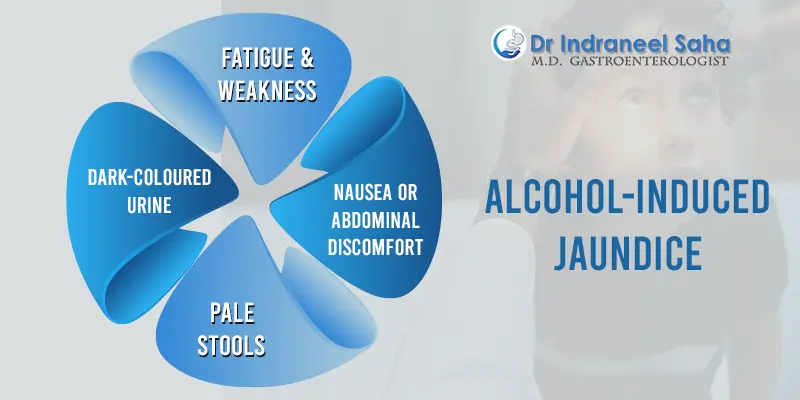
Besides yellowing of the skin, symptoms may include:
- Fatigue and weakness
- Dark-coloured urine
- Pale stools
- Nausea or abdominal discomfort
What to Do Next?
Remember that not all cases of jaundice are caused by alcohol, but excessive drinking is a major risk factor for liver damage.
So, if you are someone who is suffering from jaundice, make sure to consult a doctor for jaundice to find out the actual cause, which could be alcohol-related or other underlying medical conditions.