- 18th Aug, 2026
- Jaundice Doctor
Can Jaundice Recur After Treatment? What Leads to Its Recurrence?
Jaundice is a condition that results in the yellowing of the skin and eyes. It is often considered to be a one-time event, leading many people to believe that it is solved permanently. However, this is not the case for all individuals suffering from jaundice.
It is important to understand that jaundice is not a disease but a symptom of an underlying condition that causes the accumulation of bilirubin in the bloodstream. It is a sign that something is wrong with your liver, bile ducts or the body’s ability to process bilirubin.
In this blog, a doctor for jaundice, Dr. Indraneel Saha, discusses why jaundice recurs and how preventive measures can reduce the risk of complications.
Why Does Jaundice Occur?
Jaundice is characterised by yellowing of the skin, the whites of the eyes, and occasionally the mucous membranes. It happens due to excessive bilirubin buildup, which is a yellow pigment produced during the normal breakdown of red blood cells.
In healthy individuals, the liver processes bilirubin by taking up the yellow pigment from the blood and then converting it into a water-soluble form for excretion through the body. However, when this process is disrupted, bilirubin accumulates in the bloodstream, resulting in jaundice.
Jaundice can affect newborns, children, and adults, although the causes vary significantly depending on age and overall health.
Can Jaundice Come Back After Treatment?
According to Dr. Indraneel Saha, a reputed doctor for jaundice, the condition can recur after treatment. But the chances of its recurrence depend on its cause.
Since jaundice is a symptom rather than a disease, it may return if the primary medical condition remains untreated, relapses, or if a new disorder affecting the liver, gallbladder, or bile ducts develops.
For example, if your cause of jaundice is gallstones, jaundice can recur if the stones are not removed or if new stones form and block the bile ducts.
Again, an individual suffering from hepatitis can develop jaundice again if another liver disease occurs.
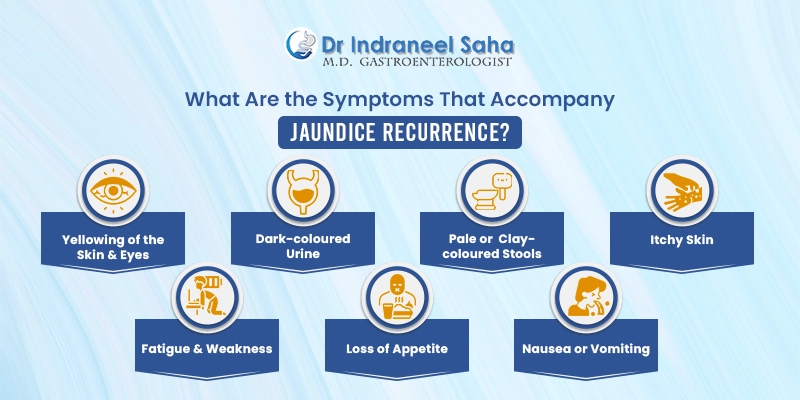
What are the Symptoms That Accompany Jaundice Recurrence?
When jaundice comes back, it is generally accompanied by symptoms such as the following:
- Yellowing of the skin and eyes
- Dark-coloured urine
- Pale or clay-coloured stools
- Itchy skin
- Fatigue and weakness
- Loss of appetite
- Nausea or vomiting
- Abdominal pain, especially in the upper right side
- Fever or chills if infection is present
- Unexplained weight loss in more serious conditions
Reasons Behind Jaundice Recurrence?
A leading doctor for jaundice lists the following causes of jaundice recurrence.
- Progressive liver disease such as chronic hepatitis B, hepatitis C, or fatty liver disease reduces the liver’s ability to process bilirubin, causing jaundice to return.
- Gallstones can lead to bile duct obstruction, which prevents bile from draining properly.
- Unhealthy lifestyle choices like heavy alcohol use, toxin-rich diets, or irregular medications
- Pancreatic or liver tumours obstruct bile ducts, leading to recurrent jaundice.
- Genetic disorders like Gilbert’s syndrome cause intermittent jaundice, often during stress or illness.
What are the Complications of Ignoring Jaundice Recurrence?
Let’s take a look at some of the severe complications of keeping recurrent jaundice untreated.
- Liver scarring and cirrhosis
- Permanent liver damage
- Chronic bile duct obstruction giving rise to infections
Measures to Prevent Jaundice Recurrence
The risk of jaundice recurrence can be reduced in the following ways.
- Limiting alcohol consumption
- Maintaining a healthy body weight
- Following a balanced diet rich in fruits, vegetables and whole grains
- Receiving hepatitis vaccinations when appropriate.
- Taking medications only as prescribed.
- Attending regular follow-up appointments
Conclusion
Jaundice is likely to recur if the underlying medical condition is not treated because it is not a disease. Anyone who notices yellowing of the eyes and skin should immediately consult a doctor for jaundice, like Dr. Indraneel Saha, to ensure timely diagnosis and treatment.