- 10th Aug, 2026
- Capsule Endoscopy
Can You Eat or Drink During a Capsule Endoscopy?
Capsule endoscopy is a significant procedure that aims to understand the complexities of the digestive system. The procedure involves swallowing a pill equipped with a camera, a light source, and a transmitter.
The capsule travels through your digestive tract, capturing thousands of images on its way, which are then transmitted to the recorder worn by the patient. The high-quality pictures help the gastroenterologist detect hidden problems in the GI tract.
Capsule endoscopy has transformed the way the digestive system is diagnosed. One of its advantages is that the procedure allows the doctor to examine the small intestine, which is difficult to reach with traditional endoscopy.
The examination takes about 8 to 12 hours to record the images, after which the capsule is excreted naturally through stool within 24 to 48 hours. Many patients preparing for capsule endoscopy have one common question, whether they can eat or drink during the procedure.
In this guide, we will provide the answer to the question and explain when you can eat and what are the foods to avoid for the best possible results.
Understanding Capsule Endoscopy?
A capsule endoscopy is a non-invasive diagnostic test that is usually recommended by a gastroenterologist like Dr. Indraneel Saha to view the lining of the small intestine and investigate unexplained digestive symptoms or detect conditions that may not be visible through conventional imaging techniques.
As mentioned, the gastroenterologist asks patients to swallow the capsule, which is the size of a vitamin pill. The capsule, while moving through the digestive system, takes thousands of images. These images are wirelessly transmitted to a recording device, which is worn by the patient on a belt or harness.
Dr. Indraneel Saha suggests capsule endoscopy to investigate the following unexplained gastrointestinal symptoms, including:
- Long-lasting abdominal pain
- Black tarry stool along with the presence of blood
- Chronic diarrhoea
- Persistent low blood counts leading to anaemia
- Unexplained weight loss
- Severe tiredness
Is It Safe to Eat or Drink During a Capsule Endoscopy Procedure?
Dr. Indraneel Saha usually advises patients to avoid eating and drinking immediately before or after swallowing the capsule. This is because the food and liquid can stick to the capsule and cover the camera, making it difficult to capture clear and high-quality images of the digestive tract.
For accurate results, the stomach should remain empty when the procedure begins. Hence, most gastroenterologists recommend fasting for 8 to 12 hours before swallowing the capsule.
Once the capsule is ingested, patients are generally advised to wait for at least 2 to 3 hours before drinking clear liquids such as water, broths or clear juice. Patients can eat a light meal, but it should be after 4 hours.
Your doctor might provide specific instructions based on your medical condition; make sure you stick to the guidelines to achieve the best outcome of capsule endoscopy.
Following your doctor’s instructions is essential so that the capsule can travel smoothly to take detailed images for the accurate diagnosis of the condition and get appropriate treatment options.
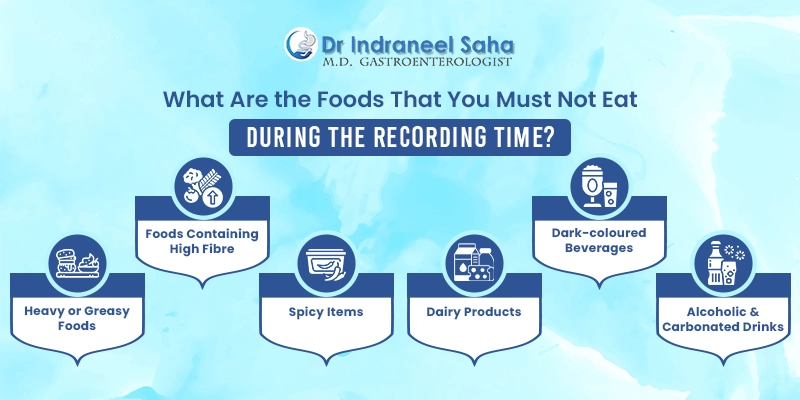
What are the Foods That You Must Not Eat During the Recording Time?
Although patients are allowed to eat a light meal 4 hours after the capsule is swallowed, here are certain foods you should avoid.
- Heavy or greasy foods like fried and junk items.
- Foods containing high fibre, as they might leave residue in the digestive tract.
- Spicy items, which usually result in digestive discomfort in some patients.
- Dairy products, such as milk, cheese, curd or yogurt.
- Dark-coloured beverages, including certain fruit juices, because they can interfere with image clarity.
- Alcoholic and carbonated drinks, as these may affect digestion.
Conclusion
A capsule endoscopy is one of the most effective ways to examine the small intestine. While the procedure is simple, it is essential to follow your doctor’s instructions to maximise the effectiveness of the test.
If you have any questions regarding dietary precautions, you can consult Dr. Indraneel Saha to make sure that you are well-prepared for the procedure.