- 26th Aug, 2026
- Esophageal Dilatation
Is Esophageal Dilation an Outpatient Procedure?
Do you often feel like the food is refusing to pass through your chest into your stomach? This is the daily struggle for patients suffering from esophageal strictures. The most effective solution to the problem is esophageal dilatation.
It is a procedure designed to widen narrowed areas of the esophagus, thereby helping patients get relief from the symptoms of dysphagia and make swallowing more comfortable.
One question that patients ask is whether the procedure is so simple that individuals are discharged on the same day.
Here is the answer.
What is Esophagal Dilatation?
Esophageal dilation is a minimally invasive procedure used to stretch or widen narrowed sections of the esophagus. The condition is commonly referred to as esophageal stricture, which makes swallowing difficult, painful, or even dangerous if food gets choked.
Dr. Indraneel Saha recommends esophageal dilatation for the following conditions.
- Esophageal strictures caused by chronic acid reflux (GERD)
- Scar tissue from surgery or radiation therapy
- Esophageal rings or webs
- Eosinophilic esophagitis
- Damage caused by swallowing corrosive substances
- Certain complications following esophageal surgery
The goal of esophageal dilatation is to restore the normal passage of food and liquids from the mouth to the stomach to provide relief from the symptoms of swallowing difficulty and chest discomfort.
How is Esophageal Dilatation Performed?
Before esophageal dilatation, patients are given sedative or light anaesthesia to ensure comfort. The doctor then inserts a thin, flexible tube called an endoscope through the mouth into the esophagus. The endoscope has a camera that allows the physician to locate the narrowed area accurately.
Once the stricture is identified, Dr. Indraneel Saha stretches it using either a balloon dilator or a bougie dilator. While using a balloon dilator, it is usually positioned within the narrowed section and gradually inflated to widen the esophagus.
Alternatively, if a bougie dilator is used, which is a flexible tube of increasing diameter, it is carefully passed through the narrowed area to expand it.
Is Esophageal Dilatation a Same-day Procedure?
Esophageal dilatation is usually a same-day procedure performed on an outpatient basis. The procedure is usually completed within 15 to 30 minutes, during which patients remain under conscious sedation to make them feel comfortable.
Once the procedure is completed, patients are kept under observation for 1 to 2 hours and then discharged. Most of the time, they are not required to stay at the hospital and are allowed to go back home once the effects of sedation wear off.
Hospital stay is only recommended in case patients experience any kind of complications or require additional medical monitoring. These can include risks such as bleeding, esophageal injury, severe pain, breathing difficulties, or other allergic reactions due to anesthesia.
The whole appointment for esophageal dilatation may last a few hours due to preparation and monitoring before and after the procedure.
Recovery After Esophageal Dilatation
Esophageal dilatation is minimally invasive and hence the recovery period is usually short. Patients are able to return to their normal activities within a few days. Some individuals experience temporary symptoms like a minor sore throat, chest discomfort, bloating, and even mild swallowing difficulty.
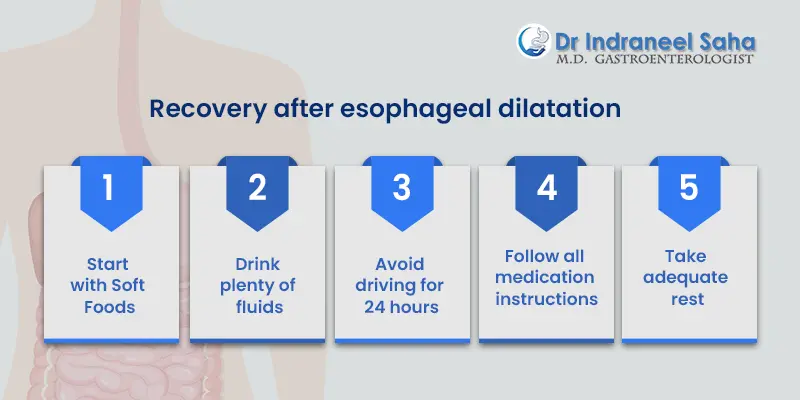
These symptoms are absolutely normal and generally improve within one or two days. For quick and safe healing, Dr. Indraneel Saha recommends the following instructions.
- Start with soft foods
- Drink plenty of fluids
- Avoid driving for 24 hours after sedation
- Follow all medication instructions
- Take adequate rest
Do You Need Multiple Sessions of Esophageal Dilatation?
Whether any patient requires multiple sessions of esophagal dilatation actually depends on the complexity of the stricture, the underlying health condition and the extent of the scar tissue formation.
Dr. Indraneel Saha reports that many patients get relief from the symptoms after a single session. However, for individuals with severe or recurrent strictures, it might happen that they need additional dilatations to gradually widen the esophagus and maintain long-term health.
Moreover, it is found that patients with conditions such as chronic gastroesophageal reflux disease (GERD),radiation-induced strictures, eosinophilic esophagitis, or complex scar tissue require multiple sessions of esophageal dilatations at certain intervals.
In addition to the procedure, your doctor might also recommend medications to address the underlying cause and reduce the risk of recurrence.
Are There Any Risks Associated With Esophageal Dilatations?
Esophageal dilation is generally safe when performed by an experienced surgeon like Dr. Indraneel Saha. Though rare, some of the complications associated with the procedure are as follows:
- Perforations: A tear or hole in the esophagus which is a serious emergency.
- Bleeding: A deep tear that results in significant bleeding and haemorrhage.
- Infections: Bacteria entering the bloodstream leading to abscess formation.
- Mucosal Tears: Shallow splits in the inner lining of the esophagus, which can cause short-term pain
When Should You Seek Medical Attention?
You can get in touch with your healthcare provider immediately in case you experience the following symptoms.
- Severe chest pain
- Persistent vomiting
- Fever
- Difficulty breathing
- Vomiting blood
- Black stools
- Severe difficulty swallowing
Early evaluation will help identify the complications and prevent further deterioration of the condition.
Can Esophageal Stricture Return After the Procedure?
Esophageal stricture is more likely to come back if the underlying cause responsible for narrowing is not treated effectively. While the procedure widens the narrowed section of the esophagus and resolves swallowing difficulties, it does not always prevent the stricture from recurring.
The esophagus can become constricted in patients with chronic gastroesophageal reflux disease (GERD) or eosinophilic esophagitis. Continued inflammation or ongoing damage to the esophagus can lead to the formation of new scar tissue, causing the esophagus to narrow again over time.
What are the Strategies to Maintain the Health of the Esophagus?
Adopting healthy habits can help reduce the risk of recurrence.
- Eat slowly and chew food thoroughly.
- Sip water with meals
- Avoid lying down immediately after eating.
- Maintain a healthy weight.
- Avoid smoking.
- Limit alcohol consumption.
- Manage acid reflux with prescribed medications.
- Attend regular follow-up appointments.
Conclusion
For most patients, esophageal dilatation is a safe outpatient procedure providing relief from narrowing of the esophagus and its associated symptoms. Make sure to get in touch with Dr. Indraneel Saha for an accurate diagnosis and successful outcome.