- 9th Sep, 2026
- Gastroenterologist
IBS vs IBD: Know the Difference Before You Self-diagnose
You have stomach pain after every meal. Some days, it is just cramping, whereas other days it is accompanied by bloating, nausea and vomiting.
So, what is the first thing that most people do? Either they will take over-the-counter drugs or Google the symptoms, only to find out that they are caused by mild food intolerance or IBS.
But what if these signs point to IBD?
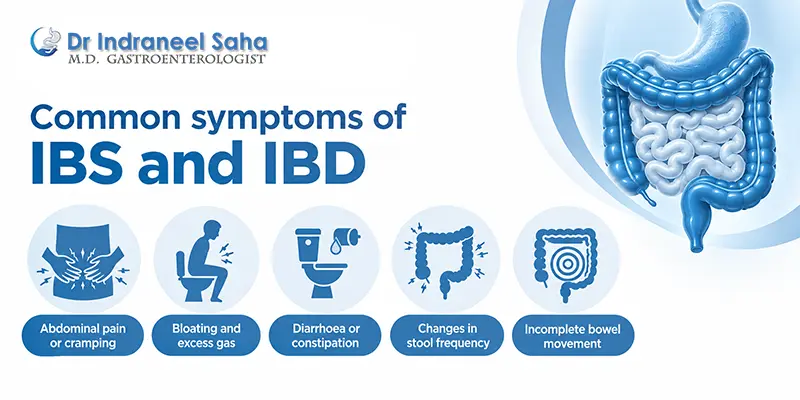
Two common gut conditions that make individuals suffer from abdominal pain, cramping, bloating, gas, diarrhoea, or constipation are IBS and IBD. Both sound almost the same and share overlapping symptoms but greatly differ in their severity and the way they are treated.
Mixing them up can delay the right treatment, leading to unnecessary anxiety and worsening of the symptoms.
In this blog, Dr. Indraneel Saha, a leading gastroenterologist in Kolkata, explains the key differences between IBS and IBD for accurate testing and a tailored treatment plan.
What is IBS?
Irritable Bowel Syndrome (IBS) is a common gastrointestinal disorder that affects the way the bowel functions. Your gut might look absolutely normal under a microscope, but it does not function the way it should. It is often associated with changes in the interaction between the gut and the brain.
The nerves and muscles become extremely sensitive, which causes patients to experience recurring digestive symptoms without damaging the intestinal lining.
IBS is quite prevalent among people and is mostly triggered by stress, certain foods, hormonal changes, or gut bacteria imbalances, and it tends to vary in severity depending on lifestyle factors.
Understanding IBD
Inflammatory bowel disease (IBD) refers to chronic inflammation in the gastrointestinal tract. It is an umbrella term for Crohn’s disease and ulcerative colitis – the two autoimmune conditions, meaning that the body’s immune system mistakenly attacks the digestive tract, causing tissue damage if not treated at the right time.
IBD is actually a structural disease, which means that the biopsy report will show ulcers, swelling, or scarring in the intestinal wall. According to Dr. Indraneel Saha, the best gastroenterologist in Kolkata, IBD needs treatment; otherwise, a delay can lead to serious complications such as intestinal strictures, fistulas, malnutrition, bowel perforations and an increased long-term risk of colorectal cancer.
IBS vs. IBD: What’s the difference?
Both IBD and IBS are chronic in nature and mostly involve flare-ups after eating certain foods or during stressful periods. But here lies the difference in the symptoms.
- Blood in Stool: Patients with both IBS and IBD may notice blood in the stool, but it is rare in IBS and a common warning sign in IBD.
- Weight Loss: Individuals may also experience unintentional weight loss. However, it is unusual in IBS but quite common in patients with IBD due to inflammation and malabsorption.
- Nighttime Symptoms: People with IBS symptoms typically do not wake you up at night due to discomfort; however, individuals with IBD often do.
- Bowel Changes: Both conditions lead to alternating diarrhoea, constipation, abdominal discomfort and changes in bowel habits. However, IBD may also cause persistent diarrhoea, urgency, abdominal pain and other signs associated with active inflammation.
- Fever and Fatigue: Generally, patients with IBS do not experience persistent fatigue, but very common in IBD due to systemic inflammation.
- Inflammation: IBS does not cause visible inflammation or damage to the digestive tract. IBD, on the other hand, is characterised by chronic inflammation.
Conclusion
Both IBS and IBD share common symptoms, but they are completely different gastrointestinal disorders. Hence, it is a good idea to get in touch with a gastroenterologist in Kolkata like Dr. Indraneel Saha to understand what’s causing them and if any further evaluation is needed to protect your digestive health.