- 12th Jun, 2025
- Abdominal Doctor, Gastroenterologist
Gastrointestinal Diseases: Symptoms, Causes & Treatment
Do you often experience stomach pain, bloating and indigestion? Most people brush these symptoms off as something normal and temporary, blaming them on eating heavy meals. But what if these signs are indicators of serious health issues related to your gastrointestinal (GI) tract?
The GI tract consists of a series of organs that are responsible for digesting food, absorbing nutrients and excreting waste from the body. When any organ or part of this track malfunctions, it leads to poor health conditions, discomfort and even life-threatening issues.
Gastrointestinal problems affect millions of people worldwide. They can either be mild, as acid reflux, or serious, like cancer. In this blog, we will explore the common symptoms, causes and treatment of GI diseases so that you can know when to seek medical attention.
What Are Gastrointestinal Diseases?
Gastrointestinal diseases are a group of ailments that affect the digestive system, namely the esophagus, liver, gallbladder, pancreas, stomach, small intestine, large intestine and rectum. Some of these conditions are acute (short-term) or chronic (long-term).
GI disorders fall into these categories.
- Functional gastrointestinal disease: This is where there are no physical or structural issues in the GI tract; however, it does not function properly.
- Structural gastrointestinal disease: Here, the healthcare provider can see the visual abnormalities.
What Are The Common Symptoms Of Gastrointestinal Diseases?
The symptoms of gastrointestinal diseases vary depending upon the conditions, but here are some of the common signs that most patients experience, states Dr. Indraneel Saha, a well-known gastroenterology doctor in Kolkata.
- Severe abdominal and cramps
- Frequent bloating and gas
- Diarrhoea or constipation
- Constant nausea and vomiting
- Loss of appetite
- Unexplained weight loss
- Blood in the stool
- Black or tarry stools
- Fatigue
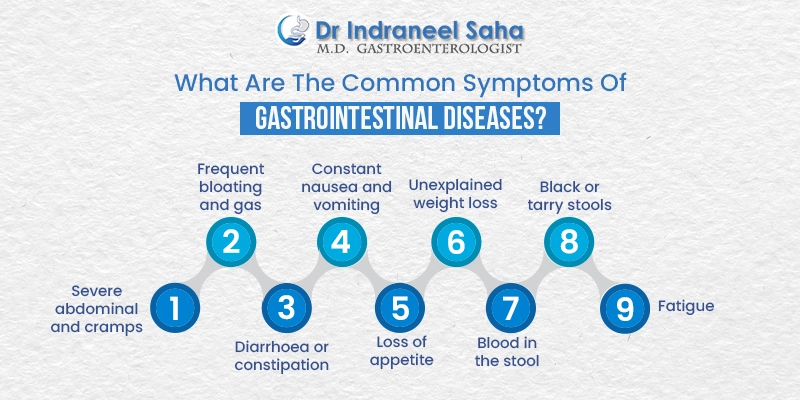
If you are experiencing these symptoms, do not ignore the signs. Make sure you consult your doctor as soon as possible, as they might indicate an underlying problem.
Causes Of Gastrointestinal Diseases
GI diseases can develop for a variety of reasons. Here are some of them.
- Poor diet and lifestyle: A high intake of processed, low-fibre foods or those containing triggers like lactose or gluten contributes to digestive disorders. Also, leading a sedentary lifestyle with no physical activity is one of the causes.
- Infections: Bacterial, viral or parasitic infections result in problems in the GI tract.
- Genetics: Some gastrointestinal issues are hereditary. If any one in your family members has had GI conditions, your chances of developing similar problems increase.
- Autoimmune disorders: There are conditions like Crohn’s disease where the immune system attacks the digestive tract.
- Medicines: Certain uses of medicines for a long time disrupt the bacteria in the gut and harm its lining.
What Are Some Of The GI Diseases?
- GERD: Here, the acid flows back into the easophagus.
- Irritable bowel syndrome (IBS): It is a condition that affects the stomach and intestines.
- Inflammatory bowel disease (IBD): It is an inflammation in the digestive tract; the two types are Crohn’s disease and ulcerative colitis.
- Celiac disease: It is an autoimmune disorder triggered by gluten consumption.
- Gastroenteritis: It is an infection and inflammation of the stomach and intestines.
- Peptic ulcers: These are open sores that develop in the stomach lining and upper part of the intestine.
Treatment options
The treatment modalities for gastrointestinal diseases depend on the specific condition and the severity of the symptoms. The common approaches include.
- Medications: Prescription or over-the-counter medicines like antacids, antibiotics, and probiotics reduce inflammation and discomfort.
- Surgical intervention: In some cases, doctors recommend surgical procedures to address the abnormalities.
Modifications in daily routine: Changes in the diet and lifestyle can help to manage GI diseases effectively.
Conclusion
Good digestive health is essential for your overall well-being. If you are experiencing persistent stomach problems, seek expert care from the best gastroenterology doctor in Kolkata, like Dr. Indraneel Saha, for accurate diagnosis and treatment.