- 22nd Jun, 2026
- Abdominal Doctor
Is Your Stomach Pain a Sign of Something Serious?
Abdominal pain is very common. You might have experienced it after a heavy meal, during stress, or due to a mild infection. In most cases, abdominal discomfort usually resolves on its own after taking over-the-counter medications. However, at times, it becomes a matter of worry and signals something more serious in the body.
Not all stomach pain are the same. It can range from a harmless gas buildup to serious conditions that require a medical emergency. So, are there any signs that indicate whether your abdominal ache is just a discomfort or something else serious?
This is where you must consult an abdominal pain specialist like Dr. Indraneel Saha, especially if you are someone who is experiencing constant stomach aches. Consulting a healthcare professional helps to identify the root cause and prevent complications.
In this blog, we are going to discuss the various causes of stomach pain, red flags to watch for, and when it is time to seek medical help.
When Does a Stomach Ache Signal Something Serious?
The key to identifying the severity of stomach discomfort is to understand the pattern along with the accompanying symptoms. As the best abdominal pain specialist, Dr. Indraneel Saha lists some of the possible symptoms that indicate your stomach pain needs to be treated.
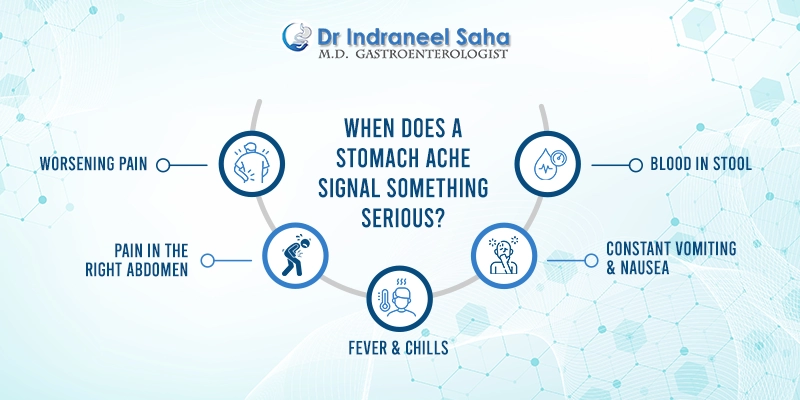
- Worsening Pain: If the pain is very intense and gets worse over time, it could probably suggest appendicitis or intestinal blockage. Some individuals even experience something that makes it impossible for them to stand, walk, or sleep.
- Pain in the Right Abdomen: Pain that starts around the navel area and shifts to the lower side of the abdomen is a warning sign, particularly if the discomfort becomes sharper with movement, coughing, or pressure.
- Fever and Chills: When the abdominal pain is accompanied by a high fever (above 100°F / 37.8°C) along with chills almost regularly, there is a high chance of infection or inflammation in the abdomen, and it should be evaluated if the symptoms persist.
- Constant Vomiting and Nausea: Repeated vomiting or nausea that does not improve with medicines indicates infections, inflammation, intestinal obstruction, or food poisoning.
- Blood in Stool: If you notice blood in stool or if the stool appears black and tarry, do not ignore it. These symptoms usually indicate bleeding in the digestive tract and can be associated with conditions ranging from haemorrhoids to more gastrointestinal disorders.
- Hard and Swollen Abdomen: If your abdomen feels hard to touch, is painful, or you are unable to pass stool and gas, it may indicate an intestinal blockage, infection, or significant inflammation.
- Unexplained Weight Loss: If you are losing weight without any dietary precautions, it may signify chronic digestive disorders, malabsorption, and in severe cases, even cancer.
If you are someone who has been experiencing these symptoms for a very long time, book an appointment with an abdominal pain specialist like Dr. Indraneel Saha for careful evaluation of the condition.
What Are Common Causes of Abdominal Pain?
Most stomach pain are mild and temporary. Here are some of the causes.
- Indigestion: Overeating, eating too quickly, or consuming spicy and fried foods often leads to digestive discomfort.
- Bloating: It occurs when excessive gas builds up in the digestive tract, causing the abdomen to feel swollen, tight, and uncomfortable.
- Food Intolerance: Certain foods, such as dairy products or those containing gluten, trigger abdominal discomfort like pain, nausea, and diarrhoea.
- Constipation: It occurs when bowel movements are irregular or when stool becomes difficult to pass. As a result, individuals suffer from cramping, bloating, and a feeling of incomplete bowel emptying.
- Infections: Any kind of infection, be it viral, bacterial, or parasitic, causes abdominal pain, fever, and vomiting. Most mild infections can be treated at home, but severe ones require medical attention.
When Does Stomach Pain Require Medical Attention?
According to Dr. Indraneel Saha, the best abdominal pain specialist, your abdominal discomfort requires medical attention if it is associated with the following.
- Appendicitis: It occurs when the appendix becomes inflamed. It typically causes pain near the navel and moves to the lower right side of the abdomen.
- Gallstones: They are hardened deposits in the gallbladder. They can block bile ducts and often result in sudden, severe pain in the upper right abdomen after eating fatty meals.
- Pancreatitis: It is an inflammation of the pancreas and can be either acute or chronic. Patients with pancreatitis suffer from severe upper abdominal pain, nausea, vomiting, and fever.
- Inflammatory Bowel Disease: Conditions such as Crohn’s disease and ulcerative colitis result in chronic abdominal pain, diarrhoea, fatigue, and weight loss.
- Cancer: Unexplained abdominal pain accompanied by symptoms like loss of appetite, blood in the stool, or ongoing fatigue is associated with cancer.
When Should You Consult a Doctor?
You should consider seeing an abdominal pain specialist if:
- Pain lasts more than 3–5 days.
- Symptoms keep recurring.
- Over-the-counter medications do not help.
- Pain is affecting daily life or sleep.
- Symptoms like fever, vomiting, or weight loss
Dr. Indraneel Saha conducts different tests, such as blood samples, diagnostic imaging, stool tests, and sometimes endoscopy, to find out the actual cause and prepare personalised treatment plans.
Treatment Options
The treatment approaches usually vary according to the diagnosis. Here are common modalities employed by Dr. Indraneel Saha.
- Lifestyle Changes: They are often the first step in managing many health conditions. These include adopting a balanced diet, maintaining a healthy weight, engaging in regular physical activity, managing stress, ensuring adequate sleep, and avoiding harmful habits such as smoking and excessive alcohol consumption.
- Medications: Medicines are prescribed to manage the symptoms, control disease progression, and address specific needs. They are given according to the health needs of the individuals.
- Surgical Intervention: When conservative treatments fail, your healthcare professional might recommend surgical intervention for severe cases like appendicitis and gallstone removal.
Conclusion
Though stomach pain is common, it should never be ignored. The key is not to pain but to pay attention to the symptoms. If something feels off or consistent, get in touch with an abdominal pain specialist like Dr. Indraneel Saha as the first step towards protecting your digestive health.