- 28th Sep, 2026
- Jaundice Doctor
Living With Chronic Liver Disease: Managing Recurring Jaundice
Jaundice is a condition where the skin and eyes turn yellow. For many, it gets resolved with proper treatment. However, for people living with chronic liver disease, it can become a recurring and worrying problem.
One episode may improve with treatment, only for the yellowing to return weeks or months later. This recurring pattern is not something to ignore.
If you are someone who is suffering from recurring jaundice, the real concern should not be to treat the yellowing of the skin and eyes but to understand why it is coming back.
Chronic liver diseases are one of the reasons that interfere with the liver’s ability to process bilirubin. It is a yellow pigment formed in the body due to the breakdown of red blood cells.
Now, when bilirubin constantly accumulates in the bloodstream, it results in a yellow colour of the eyes and skin, along with symptoms like dark urine, pale stools and abdominal discomfort.
But why does bilirubin build up in the body? And what can be done about it? Dr. Indraneel Saha, a reputed jaundice treatment doctor, answers.
What Causes Recurring Jaundice?
Jaundice is not actually a disease but a symptom caused by underlying issues related to the liver, gallbladder, pancreas, and bile ducts.
In healthy individuals, the liver processes bilirubin by taking up the bilirubin from the bloodstream and then converting it into a water-soluble form to eventually release it into bile. The pigment is then carried to the intestines to be excreted from the body, thereby keeping blood bilirubin levels under control.
According to Dr. Indraneel Saha, a leading jaundice treatment doctor, the primary reason why your jaundice keeps coming back is that the bilirubin builds up faster than the liver can process and clear it. But when does the liver get stressed?
Let’s take a look at the causes.
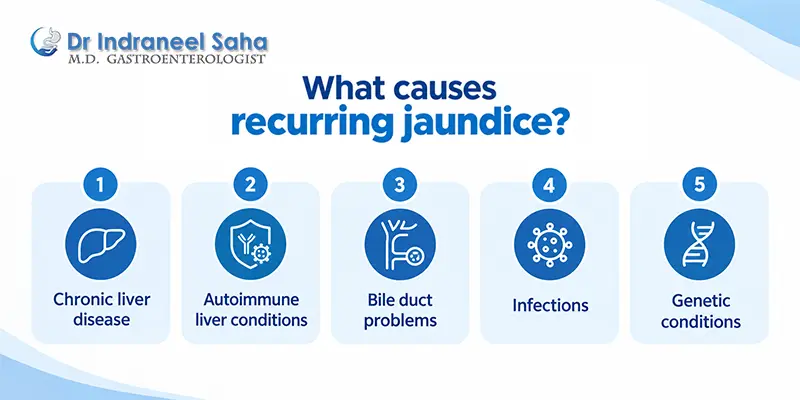
- Chronic Liver Disease – Some individuals have long-term liver disorders like cirrhosis, chronic hepatitis (B or C), or fatty liver disease. When left untreated, they progress to an advanced stage and scar the liver tissue, making it less able to process bilirubin consistently.
- Autoimmune Liver Conditions – There are autoimmune diseases like hepatitis or primary biliary cholangitis, where the immune system periodically attacks liver or bile duct cells. The ongoing inflammation impairs liver function and leads to recurring episodes of jaundice.
- Bile Duct Problems – If an individual has concerns like gallstones, strictures, or tumours, it can cause blockage in the bile flow, thereby causing the pigment to accumulate as the blockage worsens.
- Alcohol Use – Those with a habit of heavy alcohol consumption are more likely to suffer from recurring jaundice due to repeated inflammation that damages the liver.
- Medication or Toxin Exposure – There are certain drugs, including some antibiotics and overuse of acetaminophen, that put excessive pressure on the liver each time they are taken.
- Infections – Recurrent or reactivated viral hepatitis, or other infections, can also flare liver inflammation.
- Genetic Conditions – Inherited genetic conditions like Gilbert’s syndrome or hemolytic anaemias cause bilirubin levels to rise and fall based on triggers like fasting, illness, or stress.
What are the Treatment Options?
Recurring jaundice is not a disease itself but a symptom of an underlying health issue, mostly related to the liver. Hence, consulting with a jaundice treatment doctor like Dr. Indraneel Saha helps to pinpoint the exact cause.
For this, patients will be recommended to undergo blood tests such as liver function and bilirubin levels, along with imaging studies such as ultrasound or MRI, and sometimes a liver biopsy to understand exactly what’s driving each episode.
For example, if your jaundice is coming back due to viral hepatitis, patients are prescribed antiviral medications that reduce liver inflammation over time.
On the other hand, liver-related diseases require complete abstinence from alcohol. However, for advanced cirrhosis where liver function deteriorates, one might need liver transplantation.
Conclusion
Recurring jaundice is serious but is manageable with awareness and early detection. All you need to do is consult a jaundice treatment doctor like Dr. Indraneel Saha, keep a note of the symptoms and opt for treatment to avoid experiencing the symptoms again.