- 14th Jul, 2025
- Gastroenterologist
What Is Ulcerative Colitis? Causes, Symptoms & Diet Tips
Are you suffering from constant abdominal pain, cramping and diarrhoea? If these symptoms have become a regular part of your life, you would be dealing with more than a normal stomach issue. That’s the reality of millions of people worldwide with ulcerative colitis, a chronic condition that affects the colon and the rectum. If not treated, it often leads to serious health issues.
However, with the right treatment from a top gastroenterology doctor in Kolkata like Dr. Indraneel Saha, it is possible to manage ulcerative colitis. Understanding the condition, recognising the symptoms and taking dietary measures also help with improving the quality of life.
Understanding Ulcerative Colitis
Ulcerative colitis is one of the two types of inflammatory bowel disease (IBD), the other one being Crohn’s disease. It is a condition which is characterised by chronic inflammation and ulcers in the innermost lining of the large intestine. As a result, the rectum and colon become inflamed, leading to troublesome symptoms.
The inflammation associated with ulcerative colitis usually begins in the rectum and gradually spreads to parts or the whole of the colon. This ongoing inflammation ultimately leads to the development of open sores or ulcers in the intestinal lining. When left untreated, these ulcers produce pus and mucus, contributing to consistent troublesome symptoms in the digestive tract.
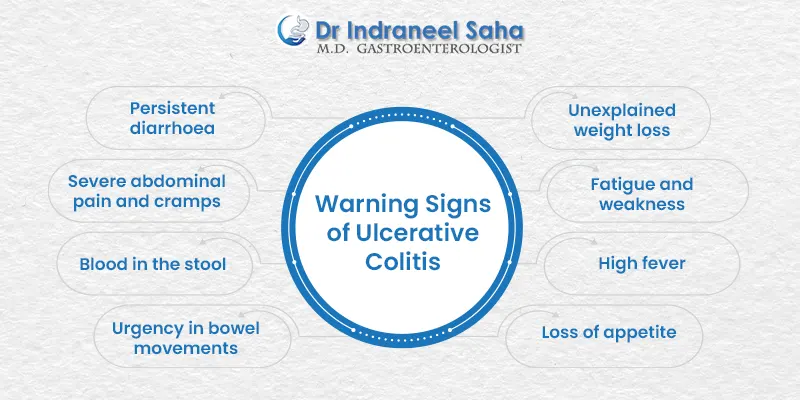
Warning Signs of Ulcerative Colitis
The symptoms of ulcerative colitis vary from person to person, depending on how severe the inflammation is and where it is located, says Dr. Indraneel Saha, a gastroenterology doctor in Kolkata. Moreover, the symptoms can be mild or severe and come in alternating waves, meaning that there might be a sudden flare-up and period of remission.
Here are some of the common signs that people generally report.
- Persistent diarrhoea: This is one of the most common symptoms of ulcerative colitis. Due to inflammation, the colon fails to absorb water, resulting in frequent and watery stools.
- Severe abdominal pain and cramps: During intense flare-ups, patients experience extreme pain and cramps in the lower abdomen. The pain even worsens after eating meals or before bowel movements.
- Blood in the stool: Rectal bleeding is a typical sign of ulcerative colitis. You might notice red blood in the stool, which happens due to a rupture in the ulcers.
- Urgency in bowel movements: People with this condition experience a sudden and uncontrolled need to have bowel movements, even when the colon is empty. There is always a feeling that the bowel is not empty even after using the bathroom.
- Unexplained weight loss: Ongoing inflammation and frequent diarrhoea result in malabsorption of nutrients, causing unintended weight loss, even though there is no change in appetite.
- Fatigue and weakness: Blood loss and poor nutrient absorption make an individual feel tired throughout the day.
- High fever: A low-grade fever is often an early sign of ulcerative colitis, indicating that the body is fighting the inflammation.
- Loss of appetite: Some patients have a reduced desire to eat, causing nutritional deficiencies over time.
In some patients, ulcerative colitis causes other symptoms outside the digestive tract, like the following:
- Joint pain
- Mouth sores
- Eye irritation
- Skin problems like bumps and rashes
If you are experiencing or noticing any combination of these symptoms, make sure to consult a top gastroenterology doctor in Kolkata. Don’t wait for the symptoms to appear. Early diagnosis helps in the effective management of the condition before it progresses to the advanced stage and causes complications.
Causes of Ulcerative Colitis
The exact cause has not been established yet. However, experts and some of the gastroenterology doctors in Kolkata attribute the reason behind ulcerative colitis to the following factors.
- Issues in the immune system: Medical experts believe that ulcerative colitis is a malfunction in the immune system. This is because ulcerative colitis is an autoimmune disorder, meaning that the body’s immune system mistakenly attacks the healthy tissues. In this case, it is the inner lining of the colon and rectum, resulting in chronic inflammation.
- Genetics: While heredity does not guarantee the development of ulcerative colitis, having a genetic predisposition increases the risk. If any one of the family members has this condition or other forms of IBD, there is a greater chance that you are likely to suffer from it.
- Environmental factors: While immune malfunction and genetics play an important role, there are other environmental factors like pollution, diet and frequent use of antibiotics that also aggravate the condition.
- Imbalance in the gut microbiome: The gut is the home to millions of bacteria. Any imbalance causes an abnormal immune response, leading to inflammation in the colon.
Dietary Precautions for Ulcerative Colitis
Though diet is not a direct cause of ulcerative colitis and does not cure the condition, dietary precautions play an important role in preventing flare-ups and easing the symptoms. Here are some of the diet tips you can follow, as suggested by Dr. Indraneel Saha, the best gastroenterology doctor in Kolkata.
Foods that You Must Include in Your Diet
- Low-fibre items such as white rice, skinless vegetables, seedless fruits and some dairy products.
- Cooked vegetables like carrots, mashed potatoes, pumpkins and bottle gourd.
- Lean sources of protein include chicken breast, scrambled eggs and fish.
- Healthy fats in moderation, particularly omega-3 acids.
- Hydrating fluids like water, coconut water and soups.
- Lactose-free milk or other alternatives like soya and almond.
Here are the foods that are recommended to limit or completely avoid to prevent the trigger and flare-up of symptoms.
- Fried and fatty foods
- Sugary drinks and caffeinated beverages
- Red and processed meat
- Excessive consumption of alcohol
- Dairy products are high in lactose.
- Artificial sweeteners
Dr. Indraneel Saha also shares some healthy eating habits.
- Eat in small and frequent amounts.
- Make sure to chew the food thoroughly.
- Stay hydrated
- Keep a food diary to manage the diet.
Conclusion
Ulcerative colitis is a lifelong condition, but it does not need to interfere with your daily routine. If you are experiencing unusual symptoms in your digestive tract, reach out to a top gastroenterology doctor in Kolkata. With proper diagnosis, timely medicines and dietary measures, it is possible to lead a healthy life.