- 7th Jul, 2026
- Gastrology Doctor Kolkata
When is a Liver Biopsy Needed?
If you have ever been recommended by your gastrology doctor to get a liver biopsy done, it is quite natural to panic and feel anxious. The liver is a vital organ that can become inflamed, scarred, or even damaged without showing any obvious symptoms. The blood test report might indicate abnormal liver enzymes, and ultrasound or CT scans can show no such structural change.
However, at times, it is important to know what exactly is happening in the cells of the liver for effective diagnosis and treatment of the disease.
If a gastrology doctor in Kolkata, like Dr. Indraneel Saha, suspects any abnormality in the liver, he suggests a liver biopsy to get a more accurate picture when standard tests are not enough.
In this blog, we are going to delve deeper and understand what a liver biopsy is and when it is actually needed.
Understanding Liver Biopsy?
In the majority of liver disorders, the patients usually do not experience any signs until the severity becomes 70% to 80%, when treatment becomes complicated. In such situations, the actual cause cannot be confirmed with blood samples or imaging tests. For such individuals, the right diagnostic procedure is a liver biopsy.
It is a procedure where a tiny sample of liver tissue is taken from the liver using a hollow needle so that it can be examined under the microscope to look for any signs of damage. Mostly, it is done with sedation or local anaesthesia to make the patients feel comfortable or relaxed.
To some patients, the procedure might seem invasive, but Dr. Indraneel Saha, a reputed gastrology doctor in Kolkata, uses modern and advanced techniques to ensure that it is painless, safe and quick.
A liver biopsy is usually performed as a day care procedure and is completed in 15 to 30 minutes for a percutaneous biopsy or 30 to 60 minutes for a transvenous biopsy.
What are the Indications for Liver Biopsy?
Below are the reasons why a gastroenterologist specialising in the treatment of liver disorders suggests a liver biopsy.
- Unexplained Liver Function Results
Whenever blood tests repeatedly show increased liver enzymes but the cause is unclear, a biopsy is needed to detect the hidden conditions that might be hepatitis, fatty liver disease, genetic disease or alcohol-related liver injury.
- Diagnosis of Chronic Liver Diseases
There are certain liver disorders that progress slowly over the years. If your healthcare provider suspects conditions like non-alcoholic fatty liver disease, hepatitis B or C infections, a biopsy is required to determine if the inflammation is mild or progressing towards cancer.
- Suspected Liver Cancer or Tumours
If the imaging tests for diagnosing liver disorders reveal a mass but fail to determine whether it is benign or malignant, a biopsy may be recommended. The procedure will help to identify the cancerous cells, metastatic liver disease and even benign lesions.
- Assessing Liver Fibrosis or Cirrhosis Stage
Another important use of liver biopsy is to identify the stages of liver fibrosis or cirrhosis. The procedure is done because early-stage fibrosis can sometimes be reversed with treatments, while advanced stages may require a liver transplant.
- Detecting Unexplained Jaundice
For patients with jaundice where routine tests do not reveal a cause, a biopsy may be needed to pinpoint the root condition, be it bile duct blockages, hepatitis, cirrhosis, or rare metabolic conditions.
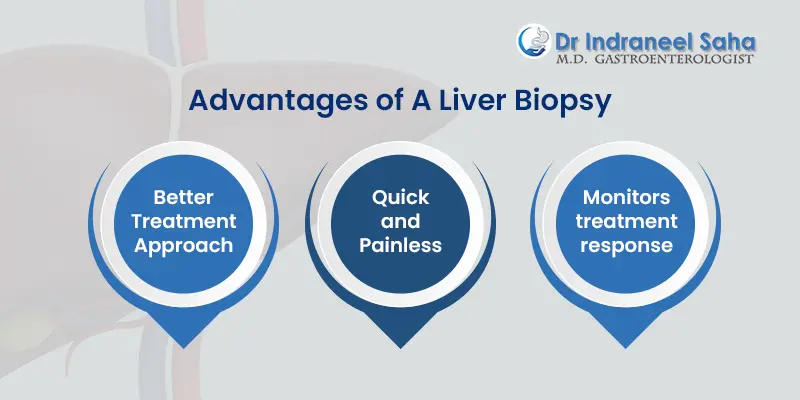
Advantages of a Liver Biopsy
A liver biopsy offers several advantages, including the following.
- Better Treatment Approach: The procedure guides treatment options, such as the right medicines or the need for surgical intervention.
- Quick and Painless: The examination, when performed by an experienced gastrology doctor like Dr. Indraneel Saha, can be done in a few minutes with no pain.
- Monitors Treatment Response: A liver biopsy can help to monitor whether inflammation or scarring is responding to treatment.
Conclusion
A liver biopsy is not a routine examination but is essential when other methods fail to identify the abnormality related to your liver health. For anyone consulting a gastrology doctor in Kolkata, a biopsy is recommended for precise diagnosis and effective treatment.