- 13th Jul, 2026
- Jaundice Doctor
How Long Does Jaundice Treatment Take to Show Results? Recovery Timeline Explained
Seeing the yellow discolouration of your skin or the whites is no doubt alarming and can give rise to unnecessary fear. It is primarily caused by jaundice, a condition that is characterised by the excess accumulation of bilirubin.
For anyone diagnosed with jaundice, the first question that comes to mind is “When will I get better?” Fortunately, most of the cases of jaundice improve with timely diagnosis and proper treatment. However, the timeline of the recovery period varies and usually depends on what is causing the condition and the patient’s overall health.
There has been a widespread notion that jaundice is a disease; however, in reality, it is not. The condition is actually a symptom of an underlying issue involving the liver, gallbladder, or blood. Hence, the recovery time is not the same for all patients.
In this blog, Dr. Indraneel Saha, a jaundice treatment doctor, provides what treatment actually involves and what factors influence recovery.
What is Jaundice?
‘Jaundice’ refers to the yellowing of the skin, the whites of the eyes, and, in some cases, the mucous membranes. This condition occurs due to the accumulation of excess bilirubin in the blood.
Bilirubin is a yellow pigment formed due to the breakdown of red blood cells. In people with normal health conditions, the liver filters bilirubin from the body using bile as the waste material. When there is damage to the functioning of the liver in terms of processing bilirubin, it accumulates in the blood, causing jaundice.
What are the Symptoms of Jaundice?
Dr. Indraneel Saha, a leading jaundice treatment doctor, says that the condition can show in individuals through various symptoms. In addition to yellowing of skin and eyes, there are other signs as well, depending on the type, cause or how quickly the condition develops.
- Dark-Coloured Urine: Excess bilirubin can cause urine to become dark in colour, mostly dark yellow, amber, or even brown.
- Pale or Clay-coloured Stools: When the bilirubin fails to reach the intestines, the poop turns pale, grey or clay-coloured.
- Fatigue: Patients with jaundice often feel extremely tired regardless of getting enough rest.
- Loss of Appetite: People who suffer from jaundice become less interested in food, especially when the disease occurs due to liver diseases.
- Nausea and Vomiting: It is normal to feel nausea and vomiting after meals when you have jaundice.
- Skin Irritation: When the level of bile salts increases under the skin, itching usually happens in the case of obstruction of the bile ducts.
- Abdominal Pain: Pain or discomfort, especially upper abdominal pain on the right side, may point to liver or gallbladder diseases.
- Fever: People with jaundice can get fever along with chills when jaundice occurs because of hepatitis or bile duct infection.
The above symptoms might vary in severity among individuals and can be present as mild or life-threatening.
What are the Treatment Options and Recovery Period?
The treatment for jaundice entirely depends on its underlying cause. An experienced jaundice treatment doctor usually begins the treatment by carefully evaluating your symptoms, medical history, and diagnostic test results. Some of the common modalities include the following.
- Medicines in case of mild infections, where patients show improvement within a few weeks to months.
- Lifestyle and dietary changes if the jaundice is caused by fatty liver disease or mild inflammation of the liver. Most patients recover within 1 to 3 months, depending on the severity of liver damage.
- Surgical intervention in case of gallstones or bile duct blockages. Here, patients can resume their daily activities within a few weeks if operated on with laparoscopic techniques.
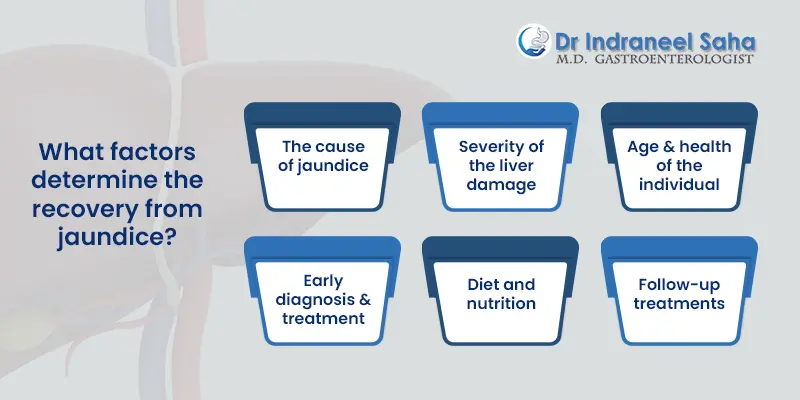
What Factors Determine the Recovery From Jaundice?
It is seen that some individuals recover within a few weeks, while others may require several months of ongoing treatment and monitoring. The recovery period usually depends on the following factors.
- The cause of jaundice
- Severity of the liver damage
- Age and health of the individual
- Early diagnosis and treatment
- Diet and nutrition
- Follow-up treatments
Conclusion
The results from jaundice treatment vary from person to person. With proper medical care, healthy lifestyle choices, and regular follow-up by an experienced jaundice treatment doctor like Dr. Indraneel Saha, most patients recover fully and get back to normal living.