- 23rd Jul, 2026
- Esophageal Dilatation
How Often Can Esophageal Dilation Be Repeated?
You are having your meals and suddenly feel like the food is choking in your chest and refusing to pass. For many people with a narrowed esophagus, this is the daily struggle while eating.
The conditions that constrict the esophagus can turn the process of swallowing food into discomfort, anxiety, or even pain. The most effective treatment that provides relief is esophageal dilatation.
It is a popular medical procedure used by a gastroenterologist to gently stretch or widen narrowed sections of the esophagus so food and liquid can pass more easily. The procedure is safe, minimally invasive and provides noticeable comfort soon after treatment.
There is no doubt that the procedure can restore swallowing function; however, in many patients, the symptoms might return over time. Hence, a common question that arises is, “How often is it possible to repeat esophagal dilation without risk?
To know the answer, let’s understand why additional sessions of esophageal dilation become necessary and what guidelines need to be followed to prevent recurrence of a constricted esophagus.
Understanding Esophageal Dilatation
Esophageal dilatation is a medical procedure used to gently stretch and widen a narrowed portion of the esophagus(the tube that carries food and liquids from the mouth to the stomach).
When a segment of the esophageal muscles gets narrowed due to damage, it becomes difficult for individuals to swallow both solids and liquids. Eventually, swallowing turns into a painful situation, and patients often experience a choking sensation in the throat or chest.
For patients with dysphagia, a leading gastroenterologist like Dr. Indraneel Saha recommends esophageal dilatation as a solution to open the passage and restore the ability to ingest foods.
How Does Esophageal Dilatation Work?
Esophageal dilation is performed by a gastroenterologist using an upper endoscope, which is a thin, flexible tube equipped with a camera. The endoscope is gently passed from the mouth into the esophagus to get a clear view of the narrowed area and understand the severity of the stricture before proceeding with the treatment approach.
Once your healthcare provider identifies the narrowed portion of the esophagus, either of the two methods is used to widen the narrowed part.
- Balloon Dilation: Here, a deflated balloon is attached to the endoscope and gently positioned within the narrowed segment. After that, the balloon is then gradually inflated, which eventually stretches the scarred or narrowed tissue, thereby increasing the diameter of the oesophagus.
- Bougie Dilation: In this method, a thin wire is placed across the narrowed section of the esophagus, and flexible dilators of different sizes are carefully passed to widen the stricture.
Esophageal dilatation is usually performed under sedation so that patients can feel comfortable and do not experience any kind of pain or discomfort. The time taken to complete one session of the procedure is roughly 15 to 30 minutes. Moreover, individuals are also discharged from the hospital on the same day after a small observation period.
How Many Times Can Esophageal Dilatation Be Repeated?
There is no fixed limit on the number of times esophageal dilatation can be performed. It actually depends on the severity of the narrowing and how the individual responds to the treatment.
According to Dr. Indraneel Saha, there are some patients who require only one or two sessions of the procedure, especially for those whose cause is treated effectively.
On the other hand, patients with chronic inflammatory disease might need additional procedures, particularly if the symptoms return.
For example, for the treatment of severe strictures, Dr. Indraneel Saha performs sessions every 1 to 3 weeks depending on the tightness of the esophageal muscles. But for recurrent narrowing, individuals might need the procedure after an interval of a few months.
In resistance cases or long-term maintenance, esophageal dilatation is necessary occasionally over the years. So, to be more specific, esophageal dilatation is repeated only when it is needed.
Is Frequent Esophageal Dilation Safe?
Repeated esophageal dilation is completely safe when the procedure is performed by an experienced gastroenterologist like Dr. Indraneel Saha. He has advanced training to maintain proper technique to perform the procedure multiple times.
Before each session, Dr. Saha ensures the following.
- There is no excessive irritation or injury near the constricted section from previous procedures.
- The symptoms have come back again and justify another dilation.
- There is almost no risk of complications.
Gastroenterologists like Dr. Indraneel Saha maintain a controlled dilation instead of aggressive stretching in a single session. This greatly helps minimise complications and allows the esophagus to heal properly between treatments.
Factors Determining the Frequency of Esophageal Dilatation
The reason for repeated esophageal dilatation can vary from person to person. Here are the factors that determine how often it is needed.
- Cause of the Narrowing
The root behind the esophageal stricture is another factor that influences the number of times the procedure is needed. For example, if the narrowing is due to acid reflux, it can improve with a single session of dilatation. However, inflammatory conditions like eosinophilic esophagitis may cause recurring symptoms, requiring more frequent dilation.
- Severity of the Narrowing
Mild strictures respond quickly to treatment and do not need treatment for a long time. But severe strictures might need repeated procedures for improvement.
- Response to Initial Dilation
If the symptoms improve significantly and remain in control, repeat procedures might be necessary, but after a certain period. However, if symptoms return quickly, then patients need to attend follow-up appointments and repeat dilation.
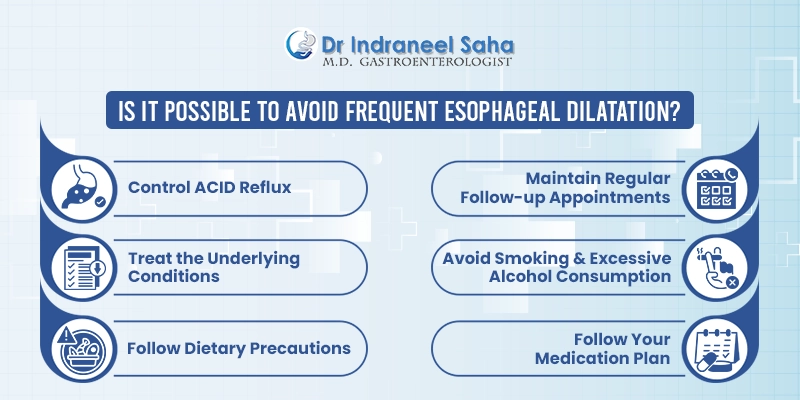
Is It Possible to Avoid Frequent Esophageal Dilatation?
Many patients do not require multiple esophageal dilatations by taking precautionary measures that keep the esophagus healthy and prevent recurrence. Here are some of them.
- Control ACID Reflux
- Treat the Underlying Conditions
- Follow Dietary Precautions
- Maintain Regular Follow-up Appointments
- Avoid Smoking and Excessive Alcohol Consumption
- Follow Your Medication Plan
Conclusion
Esophageal dilatation is a safe and effective procedure that provides relief from swallowing difficulty. Make sure to get it done by an experienced gastroenterologist and combine with medicines or lifestyle changes to reduce the need for repeated dilatations.