- 15th Oct, 2026
- Esophageal Dilatation
Normal Vs. Concerning Symptoms After Esophageal Dilatation
Being able to swallow comfortably is something most people rarely think about until it becomes difficult. When the esophagus gets constricted or narrowed, it can make eating, drinking, and even swallowing saliva uncomfortable.
An individual with oesophageal narrowing always gets a sensation that food is stuck or choking in the throat and chest. In some cases, the patient might experience discomfort, thereby making everyday meals quite stressful.
Esophageal dilation is a commonly used procedure to widen a restricted area of the esophagus so that foods and liquids can pass through the mouth to the stomach more easily.
The procedure is generally considered safe, with most patients recovering within a few days. However, some notice some distress afterwards, and a small number develop complications.
So, what are the symptoms following esophageal dilatation that are normal and resolve on their own, as compared to those for which urgent medical advice becomes necessary?
Let’s get to the details and find out the answer. But before that, we will discuss what really happens during esophageal dilatation.
What Is Esophageal Dilatation?
Esophageal dilation is a procedure recommended by gastroenterologists to widen a narrowed section of the esophagus (the tube carrying food from your throat to your stomach). The method is commonly used to treat strictures (scar-related narrowing), eosinophilic esophagitis, achalasia and constrictions developed by constant acid reflux.
During the procedure, doctors generally use a balloon or tapered dilators that are passed through an endoscope to stretch the esophageal lining. Individuals might need one session or more depending on the severity of the condition. The procedure is generally safe and usually done as an outpatient.
Esophageal dilation has a great success rate, with patients reporting improvement in symptoms after the first treatment. But as the esophageal wall is stretched, it might get a little irritated afterwards, due to which some post-operative side effects are expected.
What’s Normal After Esophageal Dilatation?
Not every uncomfortable symptom after esophageal dilatation is a sign of complication. Mild discomfort is a part of the healing and usually resolves within 24 to 72 hours.
Dr. Indraneel Saha, a well-known gastroenterologist with expertise in esophageal dilatation lists the following changes that settle on their own.
- Sore Throat: The endoscope used during the procedure can leave the throat feeling scratchy or hoarse and usually lasts for a day or two. You can drink liquids and lozenges for relief.
- Mild Swallowing Pain: There are patients who complain of mild soreness at first when swallowing after the esophagus has been dilated. This is because stretching the tissues often makes them temporarily sensitive.
- Small Amount of Blood in Saliva: It can happen that minor surface tears from stretching can give rise to blood-tinged spit, but in very small amounts.
- Drowsiness from Sedation: The procedure is usually carried out under sedation, which can lead to mild nausea, drowsiness and a feeling of fatigue that can last throughout the day.
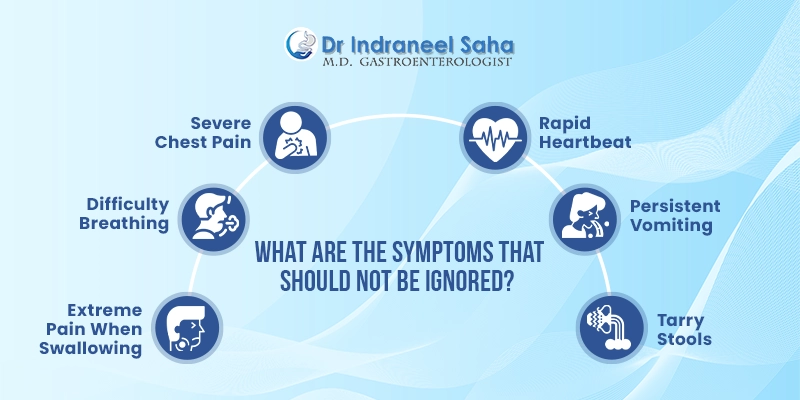
What are the Symptoms that Should Not Be Ignored?
Complications are extremely rare after esophageal dilatation, especially when performed by experienced gastroenterologists like Dr. Indraneel Saha. Make sure to seek medical advice if any of the symptoms occur and progress rapidly.
- Severe chest pain spreading to the back, neck, jaw and shoulders.
- Difficulty breathing or shortness of breath.
- Extreme pain when swallowing
- Rapid heartbeat
- Persistent vomiting or severe abdominal pain
- Tarry stools
Conclusion
Always follow the post-procedure instructions of your gastroenterologist for a speedy recovery. When in doubt, don’t ignore the symptom and let it worsen. Get in touch with your doctor and report any unusual signs to begin treatment at the right time.